IKASGAIA:HISTORIA-EKONOMIA-MGZ
MAILA:BATXILERGOA- DBH
HIZKUNTZA:INGELESA-GAZTELERA
MATERIAL MOTA:BIDEOAK
EGILEA:EUROPAKO PARLAMENTUA
HELBIDEA:EUROPALTV-DVD
Ezagutu Europa bideo hauen bitartez, 20 bideo = 20 gai.
Bideoak bi dvdtan daude sailkaturik. Lehen dvdan dauden gaiak 11-15 urteko nerabeentzat daude zuzenduta, eta bigarrenekoak 15-18 bitartekoentzat.
Bideo hauek aparte, beste motatako baliabideak ere daude erabilgarri.
Hona hemen adibide bat:
2013-02-08

2013-02-07
GEOGRAFIAKO FLASHAK
 IKASGAIA:GEOGRAFIA
MAILA:BATXILERGOA- DBH
HIZKUNTZA:GAZTELERA
MATERIAL MOTA:ARIKETA INTERAKTIBOAK
EGILEA:ITE
HELBIDEA:GEOGRAFIAKO FLASHAK
DBHko Geografia fisikoa eta politikoa lantzeko hainbat material multimedia.
Hona hemen adibide bat:
PENINSULAKO KLIMAK
EUROPAKO GEOGRAFIA
 IKASGAIA:GEOGRAFIA
MAILA:BATXILERGOA- DBH
HIZKUNTZA:GAZTELERA (Europako beste hizkuntza ofizialetan ere erabili dezakegu)
MATERIAL MOTA:ARIKETA INTERAKTIBOAK
EGILEA:TOPOROPA
HELBIDEA:EUROPAKO GEOGRAFIARI BURUZKO JOKOAK
Hona hemen adibide bat:
2013-02-05
THE BESTE PLACES TO READ &WRITE
 IKASGAIA:INGELESA
MAILA:BATXILERGOA + DBH
HIZKUNTZA:INGELESA
MATERIAL MOTA:BLOGA
EGILEA:LARRY FERLAZZO
HELBIDEA: THE BEST PLACES TO READ & WRITE
A key concept that’s important for students to learn is the importance of engaging with the text — not just being a passive reader.
There are obviously many effective instructional strategies to help them practice that lesson. One pretty explicit way is for them to have access to reading “choose your own adventure” stories where they are periodically given choices of what they want characters to do, and then participate in the construction of the story itself. The Goosebumps series of books is a well-known example of this genre. In the world of English Language Learner teaching, these kinds of stories are also called “Action Mazes.”
There are many other examples of “Choose Your Own Adventure” stories on the Web that are accessible to English Language Learners, and this “The Best…” list will share links to them. My students have always enjoyed reading these online versions.
Here you have an example:
PLASTIKA ETA IKUS-HEZKUNTZA
IKASGAIA: PLASTIKA - MARRAZKETA TEKNIKOA - GEOMETRIA
MAILA:BATXILERGOA- DBH
HIZKUNTZA:EUSKARA
MATERIAL MOTA:MODULU INTERAKTIBOAK (FLASH)
EGILEA:EDU GORDO
 HELBIDEA: PLASTIKA ETA IKUS-HEZKUNTZA
MAILA:BATXILERGOA- DBH
HIZKUNTZA:EUSKARA
MATERIAL MOTA:MODULU INTERAKTIBOAK (FLASH)
EGILEA:EDU GORDO
2013-01-29
PALABRAS AZULES
IKASGAIA:LENGUA CASTELLANA (EUSKERA ETA INGELESA)
MAILA: DBH + BATXILERGOA
HIZKUNTZA:CASTELLANO
MATERIAL MOTA:BLOGA
EGILEA:ANA GALINDO
HELBIDEA: PALABRAS AZULES. ESCRITURA CREATIVA CON TIC O SIN TIC
 Si tienes un recurso literario, o una consigna que te ayuda en la
creación escrita; si has llevado a cabo una experiencia interesante
sobre lecto.escritura, y la quieres compartir....
Si tienes un recurso literario, o una consigna que te ayuda en la
creación escrita; si has llevado a cabo una experiencia interesante
sobre lecto.escritura, y la quieres compartir....
MAILA: DBH + BATXILERGOA
HIZKUNTZA:CASTELLANO
MATERIAL MOTA:BLOGA
EGILEA:ANA GALINDO
HELBIDEA: PALABRAS AZULES. ESCRITURA CREATIVA CON TIC O SIN TIC

2013-01-15
ANTZERKIA
IKASGAIA:EUSKARA
MAILA:DBH
HIZKUNTZA:EUSKARA
MATERIAL MOTA:WEB GUNEA
EGILEA: Cristina Sierra, Elisa unibaso eta Teresa Ruizristina Sierrak, Elisa Unibasok eta Teresa Ruizek
HELBIDEA: ANTZERKIA
Getxoko Berritzeguneak urtero antolatzen duen Hizkuntzen Trataera Bateratuaren inguruko mintegian irakasle batzuek eginiko lana.
Beste hizkuntzetan (gaztelanian eta ingelesean) ere dago eskuragarri.
Webquest antzera dago antolatuta.
Make your own slideshow with music at Animoto.
MAILA:DBH
HIZKUNTZA:EUSKARA
MATERIAL MOTA:WEB GUNEA
EGILEA: Cristina Sierra, Elisa unibaso eta Teresa Ruizristina Sierrak, Elisa Unibasok eta Teresa Ruizek
HELBIDEA: ANTZERKIA
Getxoko Berritzeguneak urtero antolatzen duen Hizkuntzen Trataera Bateratuaren inguruko mintegian irakasle batzuek eginiko lana.
Beste hizkuntzetan (gaztelanian eta ingelesean) ere dago eskuragarri.
Webquest antzera dago antolatuta.
Make your own slideshow with music at Animoto.
2013-01-10
ARBELA DIGITAL (INTERAKTIBO)RAKO MATERIALEN BILDUMA
IKASGAIA: GUZTIAK
MAILA: GUZTIAK
HIZKUNTZA: GAZTELANIA
MATERIAL MOTA: BLOGA
EGILEA: PAUL BOUTROUX
HELBIDEA: LA PIZARRA DIGITAL
Orokorrean, blog honetan arbela digitalei buruzko informazio ezberdina aurki ditzakegu: arbelak erabiltzeko tutorialak, arbela motak baliabideak ikasgaiko...
Hona hemen blog honen akarpen baten adibidea:
Desde hace unas semanas, hemos iniciado una nueva colaboración con el suplementoEscolar del Heraldo de Aragón. Se trata de escribir una serie de artículos prácticos sobre uso de las pizarras digitales interactivas en las aulas: trucos, ideas de uso, consejos… Publicamos estos artículos en “La pizarra digital” unos días después.
Contenidos para pizarras digitales interactivas
Una de las grandes ventajas de las pizarras digitales interactivas es que nos permiten utilizar recursos educativos interactivos en las aulas. La idea es muy bonita pero en algunos casos – ¡no todos por suerte! – requiere bastante tiempo para preparar las actividades o encontrar contenidos adecuados ya listos para su uso.
Hoy hablaremos de esta segunda opción: buscar recursos listos para su uso con los niños. El docente tiene varias opciones que puede combinar según su necesidad:
- Utilizar los contenidos desarrollados por las marcas de pizarras interactivas y sus usuarios. A falta de formatos de PDI comunes, varias marcas de pizarras interactivas intentan potenciar su oferta de contenidos en formato propio y vale la pena buscarlos en las galerías y los sitios webs de cada marca. Suele dar buenas primeras pistas, ideas, herramientas y opciones.
Los sitios webs de las principales marcas son:
- SMART Exchange
- Centro de recursos Hitachi en inglés.
- eBeam, Solo Profes
- Promethean Planet
- Acudir a los contenidos de las editoriales: aunque las pizarras interactivas existen desde hace más de 20 años, se implantaron de manera masiva en España desde hace dos o tres años. Las principales editoriales desarrollan desde entonces contenidos interactivos para PDI como complemento de sus manuales y cuadernos. Además ya no se limitan a proponer sus manuales en formato “pdf”.
- Acudir a los recursos gratuitos de la web 2.0. Las herramientas libres de la web 2.0 permiten la creación de contenidos muy variados y muy adecuados para la educación. Numerosos sitios webs, blogs e incluso portales permiten compartir y descargar estos contenidos. Para poner algunos ejemplos tan interesantes como variados podemos nombrar:
Hay infinidad de sitios con muchísimos recursos y lo más difícil suele ser encontrar el que nos sirva con los niños pero intentaremos aprovechar esta sección para presentar otros sitios generales o más temáticos.
¿Y tú, qué opinas? ¿Qué contenidos usas? ¿Cuál es tu sitio web preferido?
Imagen: Caballeros y Castillos
Artículo en el Heraldo de Aragón, aquí.
MATEMATIKA ETA ABAR
IKASGAIA: MATEMATIKA
MAILA: DBHO
HIZKUNTZA: EUSKERA
MATERIAL MOTA: BLOGA
EGILEA: JOSE CARLOS
HELBIDEA: MATEMATIKA ETA ABAR
Blog honetan Jose Carlosek batxilergoko Matematika II-rako baliabideak eta bestelako informazioa jartzen ditu.
Hau da jarritako ekarpen baten adibidea:
Matemáticas II : Representación de funciones

En esta entrada os colgaré el archivo que contiene los problemas del bloque B de Selectividad. De momento todos los que contengan integrales y cálculo de áreas los dejamos para más adelante, para la segunda parte de la 2ª evaluación. Además irán apareciendo soluciones elaboradas con DERIVE , que sólo se podrán abrir con DERIVE.
Os enlazo otros ejercicios de este bloque de contenidos:
vitutor : problemas de optimización de funciones
problemas resueltos de aplicación de la derivada (con optimización)
videos unicoos de representación de funciones:
videos unicoos de representación de funciones:
MATH AROUND THE WORLD PROJECT
IKASGAIA: MATEMATIKA
MAILA: DBH + DBHO
HIZKUNTZA: INGELESA
MATERIAL MOTA: HELBIDEAK ETA BALIABIDEAK
EGILEA: MRS TRAYLOR (SHILOH MS)
HELBIDEA: MATH AROUND THE WORLD PROJECT
Bigarren hezkuntzako ikasleentzako matematika proiektua, webquest baten antzekoa. Ikasleek matematikariei buruzko txosten bat prestatu behar dute, horretarako baliabideak ematen dizkigu.
DirectionsOverview: You are going to research 10 mathematicians from around the world, and present your findings in a format of your choosing, with a bibliography.Specific instructions: Part I: The Research.Part II: The Project Presentation What you must turn in: 1. Your map presentation (paper or computer or other media) 2. Your summary paragraph about what mathematicians do. 3. Your index cards with your research information 4. Your bibliography Extra Credit For up to 10 points extra credit, create a neat, attractive timeline showing the birth and death dates (if applicable) of your mathematicians.
| ||||||||||||
GradingInformation about Mathematicians - 70 points (7 points for each mathematician - did you include all the required information? Is your map presentation accurate?) |

GATAZKAK KONPONTZEKO 14 TRUKU
IKASGAIA:TUTORETZA
MAILA:DBH
HIZKUNTZA:GAZTELANIA
MATERIAL MOTA: WEB
EGILEA:KATIE LEPI
HELBIDEA: PROYECTO ESCUELA 2.0
Geletan (edo eguneroko bizitzan) sortzen diren gatazkei aurre egiteko 14 kontseilu.

MAILA:DBH
HIZKUNTZA:GAZTELANIA
MATERIAL MOTA: WEB
EGILEA:KATIE LEPI
HELBIDEA: PROYECTO ESCUELA 2.0
Geletan (edo eguneroko bizitzan) sortzen diren gatazkei aurre egiteko 14 kontseilu.


2013-01-09
PUBLIZITATEA AZTERTZEN
IKASGAIA:EUSKARA
MAILA:DBH
HIZKUNTZA:EUSKARA
MATERIAL MOTA:WEBQUEST
EGILEA:
HELBIDEA: PUBLIZITATEA AZTERTZEN
MAILA:DBH
HIZKUNTZA:EUSKARA
MATERIAL MOTA:WEBQUEST
EGILEA:
HELBIDEA: PUBLIZITATEA AZTERTZEN
Orri hauetan, publizitatea modu kritikoan aztertzeko ezagutza eta
gaitasunak lortzeko lagungarri izango zaizkizun zenbait zeregin eta
tailer proposatzen dira.
Horretarako honako hau egin dezakezu:
Horretarako honako hau egin dezakezu:
- Aurretiko eginkizunak: tailerretara joan aurretik egin daitezke.
- Tailerrak gai desberdinak landu daitezke: Publizitatea aztertzen
- Ondorengo eginkizunak: tailerrak bukatu ostean egitekoak.
INGELESA LANTZEKO BALIABIDEAK
IKASGAIA:ingelesa
MAILA:DBH
HIZKUNTZA:Gaztelania
MATERIAL MOTA: web gunea
EGILEA: Ikastetxeko irakasleak
HELBIDEA: SALAMANCAKO SALESIANOS Mª AUXILIADORA
DBH mailarako inglesa irakasteko eta ikasteko online-baliabideak eta web guneak.
Ikusi adibide hauek:
THE LITTLE PRINCE; SOMEWHERE IN SPACE (I_IV)
MAILA:DBH
HIZKUNTZA:Gaztelania
MATERIAL MOTA: web gunea
EGILEA: Ikastetxeko irakasleak
HELBIDEA: SALAMANCAKO SALESIANOS Mª AUXILIADORA
DBH mailarako inglesa irakasteko eta ikasteko online-baliabideak eta web guneak.
Ikusi adibide hauek:
THE LITTLE PRINCE; SOMEWHERE IN SPACE (I_IV)
2013-01-08
TEKNOLOGIARAKO BALIABIDEAK
IKASGAIA:TEKNOLOGIA
MAILA:DBH 2.ZIKLOA
HIZKUNTZA:EUSKARA
MATERIAL MOTA:BLOGA (BALIABIDEAK)
EGILEA:
HELBIDEA: http://teknologiaroman.blogspot.com.es/
Blog honetan teknologia ikasgairako interesgarriak diren baliabideak aurkituko dira. Nahiz eta nire ikasleei zuzenduta egon, beharra duen edonori irekita dago. Klaseetan lantzen duten gaien material osagarria aurkitu daiteke. Irakasleak eta ikasleek sortutako baliabideak baino, sarean aurki daitezkeenak, loturen bitartez, azaltzen dira.
Hemen duzue blogean jarritako baliabide bat:
MAILA:DBH 2.ZIKLOA
HIZKUNTZA:EUSKARA
MATERIAL MOTA:BLOGA (BALIABIDEAK)
EGILEA:
HELBIDEA: http://teknologiaroman.blogspot.com.es/
Blog honetan teknologia ikasgairako interesgarriak diren baliabideak aurkituko dira. Nahiz eta nire ikasleei zuzenduta egon, beharra duen edonori irekita dago. Klaseetan lantzen duten gaien material osagarria aurkitu daiteke. Irakasleak eta ikasleek sortutako baliabideak baino, sarean aurki daitezkeenak, loturen bitartez, azaltzen dira.
Hemen duzue blogean jarritako baliabide bat:
2012-11-26
IKASGAIA: HISTORIA + ARTEA + EKONOMIA
MAILA:DBH + BATXILERGOA
HIZKUNTZA:EUSKARA
MATERIAL MOTA:BLOGA
EGILEA:OSKAR GAZTELU
HELBIDEA: HISTORIA + ARTE + EKO
Urritxe ikastetxeko irakasle baten bloga:
Gaur egungo antropologiaren inguruko ikerketek adierazten dutenez, gizakia beste animaliengandik bereizten duten zenbait elementuren artean sormena, abstrakzioa eta irudimena bezalako gaitasunak dira. Horiek guzti horiek dira, hain zuzen ere, arte deitu izan den ekimenaren jatorrizko tresna batzuk. Nire helburua blog honetan ikasle eta irakasleentzat materiala ipintea da; denon artean euskeraz dagoena gehitzeko, eta ez dagoena beste hizkuntzetan ikusi gero egokitzeko.
Hemen duzue ikusteko blogaren ekarpen baten adibidea:
MAILA:DBH + BATXILERGOA
HIZKUNTZA:EUSKARA
MATERIAL MOTA:BLOGA
EGILEA:OSKAR GAZTELU
HELBIDEA: HISTORIA + ARTE + EKO
Urritxe ikastetxeko irakasle baten bloga:
Gaur egungo antropologiaren inguruko ikerketek adierazten dutenez, gizakia beste animaliengandik bereizten duten zenbait elementuren artean sormena, abstrakzioa eta irudimena bezalako gaitasunak dira. Horiek guzti horiek dira, hain zuzen ere, arte deitu izan den ekimenaren jatorrizko tresna batzuk. Nire helburua blog honetan ikasle eta irakasleentzat materiala ipintea da; denon artean euskeraz dagoena gehitzeko, eta ez dagoena beste hizkuntzetan ikusi gero egokitzeko.
Hemen duzue ikusteko blogaren ekarpen baten adibidea:
2012-11-12
KALKULAGAILU POLINOMIKOA
IKASGAIA: MATEMATIKA
MAILA:DBH
HIZKUNTZA:GAZTELERA
MATERIAL MOTA:WEB GUNEA
EGILEA:IGNACIO DEL PINO
HELBIDEA: CALCULADORA POLINÓMICA
Material honekin, ikasleek konproba dezakete polinomioei buruzko ariketak.
MAILA:DBH
HIZKUNTZA:GAZTELERA
MATERIAL MOTA:WEB GUNEA
EGILEA:IGNACIO DEL PINO
HELBIDEA: CALCULADORA POLINÓMICA
Material honekin, ikasleek konproba dezakete polinomioei buruzko ariketak.
2012-11-08
IKASGAIA: INGELESA
MAILA:LH + DBH + BATXILERGOA
HIZKUNTZA:INGELESA
MATERIAL MOTA:ARIKETA INTERAKTIBOAK. OSO ONA
EGILEA: AGENDA WEB
HELBIDEA: AGENDA WEB
Ariketa interaktibo ugari mailaka sailkaturik. Hona hemen adibide batzuk:
MAILA:LH + DBH + BATXILERGOA
HIZKUNTZA:INGELESA
MATERIAL MOTA:ARIKETA INTERAKTIBOAK. OSO ONA
EGILEA: AGENDA WEB
HELBIDEA: AGENDA WEB
Ariketa interaktibo ugari mailaka sailkaturik. Hona hemen adibide batzuk:
2012-11-07
DBHrako GEOMETRIA IKASTAROA
IKASGAIA: MATEMATIKA
MAILA: DBH (1. eta 2. ZIKLOA)
HIZKUNTZA: GAZTELERA
MATERIAL MOTA: WEB GUNEA (ARIKETA ELKARERAGILEAK:CABRI)
EGILEA:JOSE MANUEL ARRANZ SAN JOSE
HELBIDEA: CURSO DE GEOMETRIA
MAILA: DBH (1. eta 2. ZIKLOA)
HIZKUNTZA: GAZTELERA
MATERIAL MOTA: WEB GUNEA (ARIKETA ELKARERAGILEAK:CABRI)
EGILEA:JOSE MANUEL ARRANZ SAN JOSE
HELBIDEA: CURSO DE GEOMETRIA
CURSO
DE GEOMETRÍA
|
2012-11-06
FORMA BEGIRADAN
IKASGAIA: MATEMATIKA + PLASTIKA
MAILA: DBH
HIZKUNTZA: EUSKARA
MATERIAL MOTA: WEB GUNEA: IBILBIDE DIDAKTIKOAK
EGILEA: ELIXIR FILMS
HELBIDEA: FORMA BEGIRADAN
MAILA: DBH
HIZKUNTZA: EUSKARA
MATERIAL MOTA: WEB GUNEA: IBILBIDE DIDAKTIKOAK
EGILEA: ELIXIR FILMS
HELBIDEA: FORMA BEGIRADAN
Aurkezpena
Ongi etorri “Forma Begiradan” ibilbide didaktiko honetara.
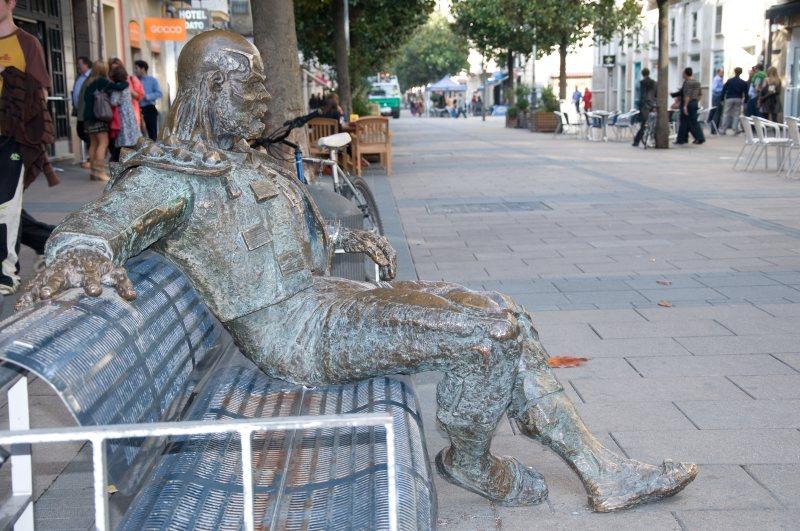
Euskal Herriko kaleetan dauden eskulturetara gerturatzeko aukera eman nahi dizuegu, batez ere DBHko ikasleak zareten guztiei.
Euskal Herriko kaleetan dauden eskulturetara gerturatzeko aukera eman nahi dizuegu, batez ere DBHko ikasleak zareten guztiei.
Azken 25 urteotan 400 eskultura baino gehiago kokatu
dira Euskal Autonomia Erkidegoan, eta haietako asko garrantzi handiko
erreferenteak dira gure hirietan. Egileei, eskultoreei dagokienez,
horietako batzuk ospe handikoak dira nazioartean, hala nola Eduardo
Chillida, Jorge Oteiza, Henry Moore, Jeff Koons, Salvador Dalí, Louise
Burgeoise, Markus Lüpertz…
Artista hauek guztiek gure Erkidegoan jarri dituzten
eskulturen berri izateko, “bost ibilbide” birtual aurkituko dituzue
Forma Begiradan, eta hauexek dira: Donostia, Tolosa, Bilbo, Gernika eta Gasteiz.
Aurkezpena:
Ibilbide bakoitzean sartzen zaretenean mapa bat aurkituko duzue: bertan azaltzen diren eskulturetara nabigatzeko aukera ematen dute.
Maparen azpian beste bost esteka ikusiko dituzue:
Ibilbide bakoitzean sartzen zaretenean mapa bat aurkituko duzue: bertan azaltzen diren eskulturetara nabigatzeko aukera ematen dute.
Maparen azpian beste bost esteka ikusiko dituzue:
Ibilbideak:
Ibilbideen orri nagusia da, eta honako informazio hau dakar:
- Eskulturak kokatuta dauden herriaren informazio orokorra.
- Eskulturak: Eskulturen sustatzaileen datuak, ibilbidearen gune interesgarriak, eskulturen irudiak eta azpimarragarriak diren beste datu interesgarri batzuk.
- Informazio gehiago: Atal honetan, eskulturak bisitatu nahi badituzue, baliagarria izango zaizuen informazioa ikusteko aukera izango duzue. Nola iritsi tokira, non lortu informazio gehiago, oinarrizko bibliografia, eta abar.
- Ibilbidea: Atal honetan, ibilbidea ikusteko aukera ematen duen bideoa duzue.
Ibilbideen orri nagusia da, eta honako informazio hau dakar:
- Eskulturak kokatuta dauden herriaren informazio orokorra.
- Eskulturak: Eskulturen sustatzaileen datuak, ibilbidearen gune interesgarriak, eskulturen irudiak eta azpimarragarriak diren beste datu interesgarri batzuk.
- Informazio gehiago: Atal honetan, eskulturak bisitatu nahi badituzue, baliagarria izango zaizuen informazioa ikusteko aukera izango duzue. Nola iritsi tokira, non lortu informazio gehiago, oinarrizko bibliografia, eta abar.
- Ibilbidea: Atal honetan, ibilbidea ikusteko aukera ematen duen bideoa duzue.
Egileak:
Eskultura horiek egin dituzten artisten “datu biografikoak”, haien lanaren ibilbidearen garapena, obra garrantzitsuenen informazioa…
Eskultura horiek egin dituzten artisten “datu biografikoak”, haien lanaren ibilbidearen garapena, obra garrantzitsuenen informazioa…
Eskulturak:
Artelan bakoitzaren deskripzioak, irudiak eta, gehiago jakin nahi duzuenontzat, artikuluak, elkarrizketak, web-orriak, etab. ikusteko eta irakurtzeko aukera izango duzue.
Artelan bakoitzaren deskripzioak, irudiak eta, gehiago jakin nahi duzuenontzat, artikuluak, elkarrizketak, web-orriak, etab. ikusteko eta irakurtzeko aukera izango duzue.
Jarduerak:
Ibilbide bakoitzean ikasi duzuena praktikan jartzeko, jolasak eta hainbat ariketa egiteko aukera izango duzue.
Ibilbide bakoitzean ikasi duzuena praktikan jartzeko, jolasak eta hainbat ariketa egiteko aukera izango duzue.
Irakaslearen atala:
Eskultura publikoaren gaia eskolan jorra dadin, “Forma Begiradan” web-orri honen bidez, DBHko irakasleei ere laguntza eskaini nahi diegu. Bertan, arte-hezkuntza orduetan gelan lantzeko hainbat jarduera eta iradokizun planteatzen ditugu. Atal honetan hainbat estrategia didaktiko eskaintzen zaizkie DBHko irakasleei, arte publikoarekiko esperientzia ulertzen, interpretatzen eta deskodetzen lagun diezaieten beren ikasleei.
Eskultura publikoaren gaia eskolan jorra dadin, “Forma Begiradan” web-orri honen bidez, DBHko irakasleei ere laguntza eskaini nahi diegu. Bertan, arte-hezkuntza orduetan gelan lantzeko hainbat jarduera eta iradokizun planteatzen ditugu. Atal honetan hainbat estrategia didaktiko eskaintzen zaizkie DBHko irakasleei, arte publikoarekiko esperientzia ulertzen, interpretatzen eta deskodetzen lagun diezaieten beren ikasleei.
Aukera gehiago.
Maparen goiko aldean lau esteka dituzue: ibilbide batetik bestera azkar joateko balio dute, eta orriaren eskuinaldean, hiru ataletan banatuta dauden estekak dituzue: sakatu eta ibilbide bakoitzean dauden eskulturetara edo egileengana eramango zaituztete.
Maparen goiko aldean lau esteka dituzue: ibilbide batetik bestera azkar joateko balio dute, eta orriaren eskuinaldean, hiru ataletan banatuta dauden estekak dituzue: sakatu eta ibilbide bakoitzean dauden eskulturetara edo egileengana eramango zaituztete.
2012-11-05
URA, BIZIKIDETZAREN ITURRIA
IKASGAIA: ARLOANITZA
MAILA: DBH
HIZKUNTZA: EUSKARA
MATERIAL MOTA: WEB GUNEA
EGILEA:ANDONI ALDEKOETXEA
HELBIDEA: URA, BIZIKIDETZAREN ITURRIA
 “URA, BIZIKIDETZAREN ITURRIA” proiektuaren bidez,
ikasleak uraren inguruko zenbait kontu aztertuko ditu: uraren zikloa
naturan; munduko hainbat tokitako ur-premiak, kontsumoa eta hornidura;
ibaietako uraren kalitatea…
“URA, BIZIKIDETZAREN ITURRIA” proiektuaren bidez,
ikasleak uraren inguruko zenbait kontu aztertuko ditu: uraren zikloa
naturan; munduko hainbat tokitako ur-premiak, kontsumoa eta hornidura;
ibaietako uraren kalitatea…
MAILA: DBH
HIZKUNTZA: EUSKARA
MATERIAL MOTA: WEB GUNEA
EGILEA:ANDONI ALDEKOETXEA
HELBIDEA: URA, BIZIKIDETZAREN ITURRIA
“URA, BIZIKIDETZAREN ITURRIA” proiektuaren bidez,
ikasleak uraren inguruko zenbait kontu aztertuko ditu: uraren zikloa
naturan; munduko hainbat tokitako ur-premiak, kontsumoa eta hornidura;
ibaietako uraren kalitatea…
Bestalde, ikaslea urak naturan nahiz
gizartean daukan garrantziaz jabetu eta oinarrizko eskubidetzat hartzeko
gai izango da. Uraren erabilera arduratsuaren aldeko jarrera eta
ekimena indartuko ditu, eta ondorioz, proiektuaren bukaeran gogotsu
ekingo dio eskolako kontzientziazio-kanpaina antolatzeari.
Lantzen diren ikasgaiak:
Ingurunearen Ezaguera, Hizkuntzak eta Herritartasuna
Material hau LHko azken ziklorako egokitua izan arren, aldaketa txiki batzuekin DBH 1.zikloan ezar dezakegu, beste arloek ere parte har dezakete.
Harpidetu honetara:
Mezuak (Atom)
